REVIEW · LUXOR
River Cruise Tour on the Nile Luxor to Aswan- Sightseeing & Guide & Meals Inc
Book on Viator →Operated by Look at Egypt Tours · Bookable on Viator
Five days, and the Nile does the work. This Luxor to Aswan cruise is designed for people who want the big-name ancient sights without the logistics headaches, since you’re taken from place to place by private vehicle and then glide between stops from your 5-star ship. What I like right away is the sense of less planning, more time to look.
I also love the qualified Egyptologist guide approach. At places like Karnak and the temples around Aswan, the explanations matter, because Egypt’s symbols, power, and even the layout of worship spaces can feel random if you’re just reading plaques.
One consideration: the cruise schedule can change based on Nile water levels, so your exact sightseeing moments may shift by departure. For most people that’s fine, but if you have tightly timed connections, keep a little buffer.
In This Review
- Key highlights at a glance
- Luxor to Aswan by ship: why this plan feels easy
- What’s actually included on the luxury cruise
- Day 1: Karnak and Luxor Temple before you even settle in
- Day 2: Valley of the Kings, Hatshepsut’s temple, and the Colossi of Memnon
- Day 3: Kom Ombo’s double temple and Horus Temple’s stillness
- Day 4: Philae Temple, UNESCO’s rescue, and Agilika Island
- Food, timing, and the day rhythm on a Nile cruise
- Value for $1,015: when this feels like a smart buy
- Guide quality: why the right person changes everything
- Practical tips for a smoother Nile cruise day
- Should you book this Luxor to Aswan cruise?
- FAQ
- What time does the tour start?
- How long is the Luxor to Aswan Nile cruise?
- What’s included in the price?
- Are drinks included with meals?
- Which major ancient sites are visited?
- Does the Valley of the Kings visit include Tutankhamen’s tomb?
- Can the itinerary change during the cruise?
- What’s the cancellation policy for a full refund?
Key highlights at a glance
- Karnak and Luxor Temple with guide-led context instead of just walking in and out
- Valley of the Kings visit to multiple tombs with the included ticket setup
- Philae Temple moved by UNESCO to Agilika Island, making the story behind the stones real
- Kom Ombo’s double-temple design, including the Sobek-focused southern section
- Private group experience, so the day feels paced to your people rather than a giant crowd
- Meals plus entry fees covered, which keeps daily budgeting simple
Luxor to Aswan by ship: why this plan feels easy
The biggest advantage here is that you’re not constantly changing transportation. You start on the east bank of Luxor, then later you work your way through the Nile corridor toward Aswan, with the cruise doing the “getting there” part between major sights. That’s a big deal because Egypt’s sites are spread out, and travel time can swallow your energy fast.
In practical terms, this style of cruise works well if you want:
- fewer “where do we go next” moments
- more time standing in front of monuments instead of racing between them
- a guide who can connect what you’re seeing across days
And because this is a private tour/activity (your group only), the experience tends to feel more tailored, even though it follows a set sequence of iconic sites.
You can also read our reviews of more boat tours in Luxor


What’s actually included on the luxury cruise
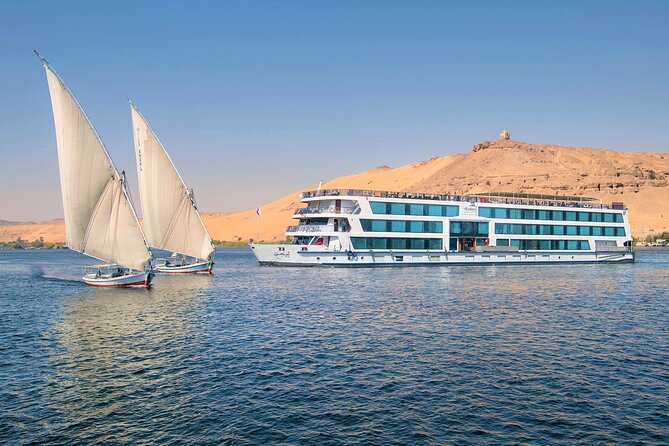
The price you see is $1,015 per person, for about 5 days (with 4 nights on the Nile). For that, you’re not just paying for a bed on a boat. The package includes:
- Transport by private vehicle
- A qualified Egyptologist guide
- Breakfast (4), lunch (4), dinner (4)
- Entry fees / admission tickets for the listed sites
- Round-trip transfers (airport, station, or hotel, depending on your situation)
- A mobile ticket
- Pickup is offered (with a meeting start time of 8:00 am)
Drinks are not included (alcoholic drinks can be purchased). That’s normal for many tours, but it’s worth planning around. If you like wine or cocktails with dinner, budget a little extra so you don’t get surprised at the end of the meal.
One more practical note: the cruise name is only shared after confirmation, and the sightseeing may be adjusted for Nile water conditions. That can feel vague when you’re booking, but it’s also a sign they’re being realistic about operating on a working river.
Day 1: Karnak and Luxor Temple before you even settle in
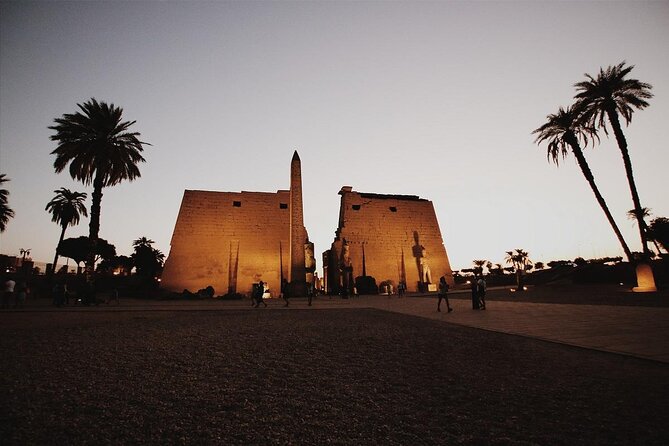
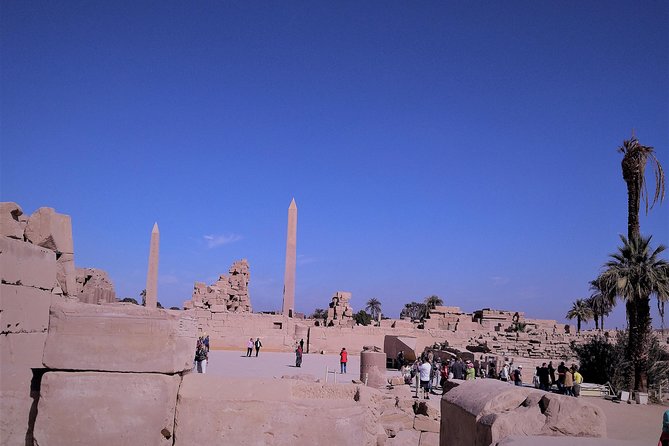
You begin on the east bank with Karnak Temple, one of those places that’s hard to take in at normal walking speed. Karnak isn’t just a single temple. It’s a massive complex dedicated primarily to Amun and dating back to as early as 2000 BC. You’ll feel why it’s often compared in popularity to Egypt’s most famous structures.
What makes this stop worth doing with a guide is that Karnak’s scale can be overwhelming. The guide-led angle helps you notice relationships between spaces and how the site worked as a statement of power, religion, and royal identity.
Next comes Luxor Temple, built around 1400 BCE. It’s a cleaner “wow” moment after Karnak, and it’s tied to the living city of Luxor on the Nile’s east bank. Even if you’ve seen photos, being there in person changes the feel—especially at the scale of stone corridors and ceremonial space.
Tip for your day one mindset: don’t force yourself to “finish” every wall. Let the guide point out a few key areas, then slow down. Karnak rewards slow.
Day 2: Valley of the Kings, Hatshepsut’s temple, and the Colossi of Memnon
The second day moves to the west bank’s big-ticket funerary and monumental sites, starting with the Valley of the Kings. This is the burial ground of many New Kingdom pharaohs, and the site is associated with major names—like Tutankhamen, whose tomb was discovered almost intact in 1922.
Here’s the important ticket detail: your included ticket allows visits to 3 tombs out of 63, and it excludes Tutankhamen’s tomb. That means you’ll still see inside tombs, but you’re not guaranteed the most famous one.
A good guide can make a tomb visit feel more meaningful, because inside these spaces, it’s not only about the art. It’s also about how the tomb’s decoration connects to beliefs about the afterlife. Also, keep in mind that these tombs are sensitive to visitors and conditions. Follow your guide’s direction on photography and behavior inside the tombs, because the artwork and surfaces can be easily affected by humidity and close-up use of flash.
After that you visit Temple of Hatshepsut, often described as the strong lady’s temple. This is one of those places where the architecture is compelling, but the story is what locks it in. You learn how she ruled for about 16 years, the political friction around women rulers in ancient Egypt, and how later events affected what survived. The temple works best when you’re not treating it like a random stop, but like a political and religious statement in stone.
Then you close the day with the Colossi of Memnon—two enormous stone statues of Pharaoh Amenhotep III. They’ve stood for about 3,400 years in the Theban necropolis west of the Nile. Short stop, big impact. Even when you don’t spend long, standing beside them gives you scale you can’t get from a postcard.
Day 3: Kom Ombo’s double temple and Horus Temple’s stillness
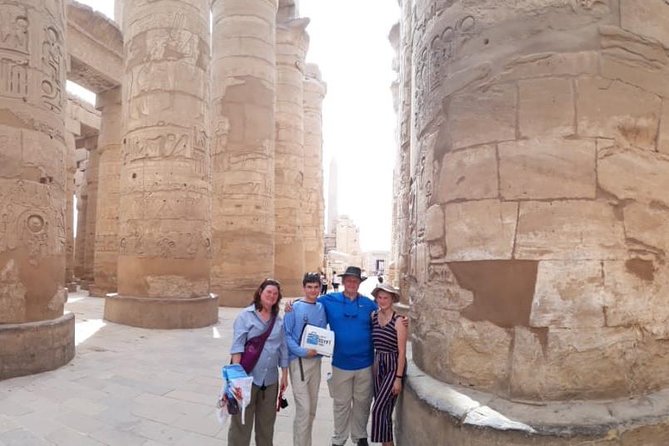
On day three you head to two temple sites in the Aswan area.
First up is Kom Ombo, known for its unusual layout as a double temple. It was constructed during the Ptolemaic dynasty (180–47 BC) and has a split focus:
- the southern half dedicated to Sobek, the crocodile god tied to fertility and creation
- the northern section linked to Horus-related worship (the guide will connect the symbolism)
This stop is a good example of why a guide matters. Double temples can sound like a “fun trivia” fact, but the layout helps you understand how Egyptians (and later rulers) structured sacred space for different divine roles.
Then you visit Temple of Horus. Built between 237 and 57 BC, it’s often highlighted for being one of the best-preserved ancient monuments. One reason is that desert sand filled the area after the pagan cult was banned, helping preserve the structure. You’ll also notice the roof intact, which makes the temple feel unusually atmospheric compared with other open-air ruins.
If you’re the type who likes quiet moments at historical sites, this is where day three can feel especially satisfying.
You can also read our reviews of more guided tours in Luxor

Day 4: Philae Temple, UNESCO’s rescue, and Agilika Island
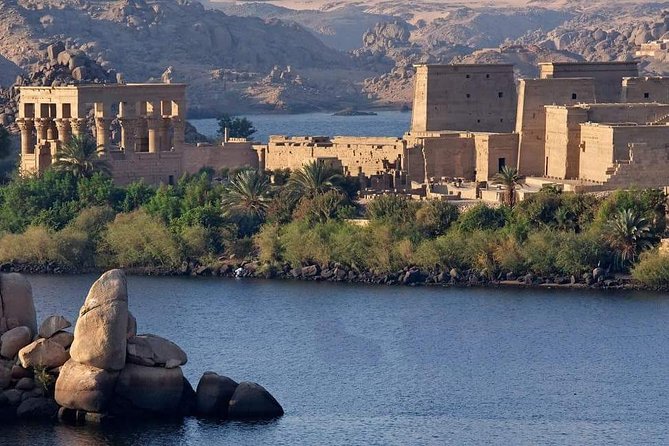
The day starts to feel “bigger than a normal temple tour” when you reach Philae Temple, 12 kilometers south of Aswan. Philae was an important monument site and a pilgrimage center for the cult of Isis for centuries, stretching through pharaonic, Greek, Roman, and Byzantine periods. Each era left its mark.
The most memorable part for many people here isn’t only the stone—it’s the rescue story. When UNESCO initiated a rescue project, the temples were saved from a watery grave by being transferred block by block from Philae Island to Agilika Island. That means you’re not just visiting ancient architecture. You’re visiting the results of modern intervention to protect that architecture.
Expect your guide to connect why the relocation mattered and what changes (and what doesn’t) when monuments are moved. It’s also a strong reminder that preservation takes effort beyond just “don’t touch.”
Food, timing, and the day rhythm on a Nile cruise
Meals are included: breakfast, lunch, and dinner, each listed as included four times. That kind of coverage sounds standard, but on a trip like this, it’s actually a quality-of-life upgrade.
Without included meals, you end up doing mental math and searching for the “best deal” after already spending hours in the heat and at walking sites. With meals handled, you can plan your energy like this:
- Eat first, then sightsee while you still feel fresh
- Use lunch as a reset, not as an afterthought
- Keep dinner simple and early enough to rest for the next day
Drinks aren’t included, so if you’re used to ordering juice, soda, or alcohol with every meal, you’ll want to plan for that. The good news is that “available to purchase” usually means you won’t be stuck without options.
On a cruise, the day rhythm also affects how much you remember. A guide-led flow helps you avoid the common problem where you see five landmarks in a day and remember only the photos.
Value for $1,015: when this feels like a smart buy
At $1,015 per person, you’re paying for a bundle: ship time, guiding, meals, and site admissions, plus transfers by private vehicle. The value question isn’t just “is a Nile cruise expensive.” It’s whether the package reduces the cost and hassle of doing it yourself.
This tour can feel like good value if you care about:
- paying once for entry fees and tickets
- not spending your time coordinating transport between Luxor and Aswan
- having a guide who can make the monuments more readable
And the price becomes easier to justify when you realize how much you’d otherwise spend on a mix of independent tickets, local transport, and guided explanations you might regret skipping.
One thing to keep in mind: this is private and custom to your travel date. If you’re traveling solo, private arrangements can raise the effective cost. But since the package is meant for a group-only experience, it can be especially cost-friendly when split among travel companions.
Guide quality: why the right person changes everything
This kind of trip can go two ways. You can walk from one grand site to another and still feel like you’re just looking at stone. Or you can get the story behind the symbols, the building logic, and the historical turning points.
In the feedback you provided, Ahmed El Sayed is praised as amazing, patient, and thoughtful—someone who makes everything come alive. Another standout mentioned is Ahmad Gad, described as exceptional. That kind of guide skill matters most at the big complex sites where details are easy to miss.
Even with a strong guide, do one small thing that helps: ask for one or two “things to look for” before you start walking. Then you’ll remember more than just the main photo spot.
Practical tips for a smoother Nile cruise day
- Expect a start time of 8:00 am. Build in buffer energy for early departures.
- Bring light layers and sun protection. Temple days can be long, and shade doesn’t always line up with your route.
- Plan around photo etiquette inside tombs. These spaces are fragile, so follow your guide’s direction.
- Don’t treat the itinerary like a rigid checklist. The cruise sightseeing can change with Nile water levels.
- Budget for drinks. Meals are included; drinks are not.
Also, because the cruise name is provided after confirmation, don’t worry if it’s not shown at booking. That’s typical for operating schedules, and you should get what you need after confirmation.
Should you book this Luxor to Aswan cruise?
If you want an efficient, guided way to see Egypt’s headline monuments without stitching together transport, tickets, and explanations, I think this cruise makes a strong case. The combination of entry fees, meals, private transfers, and an Egyptologist keeps your mental load low, so you can focus on the sights.
I’d skip it (or at least hesitate) if you have very strict timing for connections and can’t absorb schedule shifts, since Nile water levels can change what’s feasible. If you’re flexible and you like learning while you look, this is exactly the kind of “let someone else do the hard parts” trip that pays off.
FAQ
What time does the tour start?
The experience start time is 8:00 am.
How long is the Luxor to Aswan Nile cruise?
It’s listed as 5 days (approximately) with 4 nights on the Nile cruise.
What’s included in the price?
The package includes private vehicle transport, a qualified Egyptologist guide, breakfast (4), lunch (4), dinner (4), entry fees/tickets, and round-trip transfers (airport, station, or hotel depending on your situation).
Are drinks included with meals?
Drinks are not included. Alcoholic drinks are available to purchase.
Which major ancient sites are visited?
You’ll visit Karnak, Luxor Temple, the Valley of the Kings, Temple of Hatshepsut, Colossi of Memnon, Kom Ombo, Temple of Horus, and Philae Temple.
Does the Valley of the Kings visit include Tutankhamen’s tomb?
No. The included ticket lets you visit 3 tombs out of 63, and it excludes Tutankhamen’s tomb.
Can the itinerary change during the cruise?
Yes. The cruise sightseeing may be subject to change based on the water level of the Nile, and sightseeing can be customized according to your travel date.
What’s the cancellation policy for a full refund?
You can cancel up to 6 days in advance for a full refund. Any changes made less than 6 full days before the start time are not accepted.