REVIEW · VIENNA
Vienna: Danube River Cruise w/ optional Viennese Specialties
Book on GetYourGuide →Operated by DDSG Blue Danube Schiffahrt GmbH · Bookable on GetYourGuide
Vienna looks different when you’re cruising it. This DDSG Blue Danube sail gives you a relaxed way to enjoy river views and practical sightseeing, with the option to add Viennese food on board. I like how the route lines up real landmarks you can actually spot from the water, and I like that the crew and service seem to run smoothly. One heads-up: you’re not trying to see palace-and-museum Vienna from the river, so if you’re chasing Belvedere or Schönbrunn, this won’t replace them.
You can choose a shorter cruise or an extended one that pushes farther downriver toward the Prater area. Either way, you get a mix of “modern” skyline and “green” riverside scenery—plus stops that help you understand where the city’s growing and shifting.
In This Review
- Key highlights you’ll care about
- A Danube cruise that changes how you see Vienna
- Short vs extended: what changes in your 1.5–3.5 hours
- Modern Vienna views: Danube Tower and the skyline line-up
- Spittelau, Roßau Barracks, and Ringturm from the river side
- Schwedenplatz stop: your short option turning point
- Longer cruise: Prater woods, Freudenau Lock, and Danube Island
- Optional Viennese specialties: good onboard food, no drinks included
- Price and value: why this usually feels like a bargain
- What you won’t see (and how to pair this cruise smartly)
- Who should book this Danube cruise?
- Should you book the Vienna Danube River cruise with optional Viennese specialties?
- FAQ
- FAQ
- How long is the Vienna Danube River cruise?
- What’s included in the price?
- Are drinks included?
- Where do I meet the tour?
- Where does the cruise end?
- Is the cruise wheelchair accessible?
- Do children get a discount?
- What languages are the host or greeter?
- How flexible is booking if my plans change?
- What is the cancellation window?
Key highlights you’ll care about
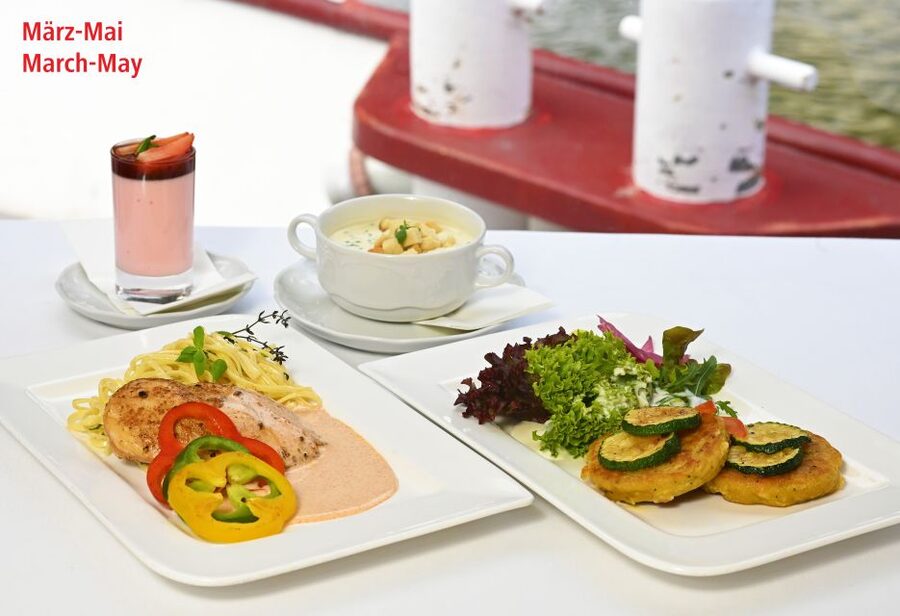
- Optional Viennese specialties onboard when you pick the food option (drinks are not included)
- Modern Vienna from the water with views tied to the Danube plateau skyline, Danube Tower, and Millennium Tower
- A route built around locks and canals via the Nussdorf lock system into the Danube Canal
- Hundertwasser-designed Spittelau heating plant from the river corridor
- Longer option reaches the Prater side after a stop around Schwedenplatz and then onward past Freudenau Lock and Danube Island
A Danube cruise that changes how you see Vienna
If you’ve been walking Vienna all day, this kind of outing gives your feet a break. You sit, you look, and you let the city slide by at a speed that’s easy on the eyes. The Danube here isn’t just scenery—it’s part of how Vienna connects its districts, working waterways included.
I also like that the experience is built for different energy levels. The shorter cruise gets you the Danube-with-Vienna feel without burning half a day, while the longer option adds more “downriver” scenery and more time to take in the mix of architecture and green spaces.
Do note the tradeoff: from the water, you’ll see plenty, but not all the “postcard big guns.” This is more about the riverfront Vienna texture than about getting the best angle for palaces and classic garden landmarks.
You can also read our reviews of more boat tours in Vienna
Short vs extended: what changes in your 1.5–3.5 hours
The biggest decision is how far you want to go. The cruise runs about 1.5 to 3.5 hours, depending on which option you select, with starting times varying by availability.
On the shorter option, your route includes a scenic waterway loop and then a quick stop at Vienna/City station at Schwedenplatz, where the cruise ends. That means you’re mostly focused on the central urban-and-canal side of Vienna and the “modern skyline” view corridor.
On the longer option, after that Schwedenplatz area stop, you continue toward the city’s greener areas, including the Prater area woods. You then sail downstream from Freudenau Lock, pass Danube Island, and view a grain silo that’s been converted into a hotel and stadium. The extended cruise wraps up back at Reichsbrücke.
If you’re deciding between them, I’d use this rule: choose the short cruise if you want a compact highlight ride. Choose the long cruise if you want more river character and more variety beyond the tight city core.
Modern Vienna views: Danube Tower and the skyline line-up
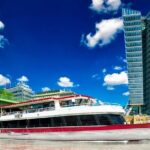
One of the smartest parts of this cruise is how the sightseeing is set up around Vienna’s Danube skyline. As you move along the waterway, you’ll see views tied to the Danube plateau skyline, including the Danube Tower and the Millennium Tower. From the deck, these aren’t abstract landmarks—they’re shaped by their river setting, which makes the city feel more connected and less boxed in.
The cruise also guides you through the water system that helps define Vienna’s waterfront. You travel via the Nussdorf lock system to reach the Danube Canal. Locks can sound like a technical footnote, but from the passenger side they become part of the “how this place works” story—very Vienna, very practical.
This is the kind of sightseeing that’s easy to enjoy even if you don’t plan to recognize every building. You don’t have to be an architecture student. You just get to watch how the city sits between water, industry, and skyline.
Spittelau, Roßau Barracks, and Ringturm from the river side
Vienna isn’t only elegant buildings and gilded facades. This route shows the city as a working place, and that’s part of why the views feel fresh.
As you pass through the city corridors, you get a look at the Hundertwasser-designed heating plant in Spittelau. Even if you’re not deep into design, this is one of those spots that reads instantly as unusual in a good way. Seeing it from the river helps it feel like part of the city’s living design language, not just a distant “sight.”
You’ll also see Roßau Barracks and the Ringturm from the water. These aren’t the “everyone takes a photo here” attractions, but they give you context for how Vienna’s inner districts are organized and how the river sits in the broader urban grid.
A small but important point: these views are best enjoyed slowly. The boat moves at a leisurely cruise pace, so you can actually take a moment to look, rather than sprinting between photo stops.
Schwedenplatz stop: your short option turning point
The shorter cruise includes a brief stop at Schwedenplatz at Vienna/City station. This is your cutoff point if you picked the compact itinerary. It’s useful because it gives you a clear sense of where you are in Vienna—near enough to connect to other plans without committing to a longer downstream ride.
If you’re trying to build the day, this stop is handy. You can pair the cruise with other nearby sights on foot or by transit without feeling like the tour is dragging you too far. It’s also a good “reset moment” if you’re tired—step off, stretch, and decide what’s next.
For most people, Schwedenplatz is less about spending time sightseeing and more about using the cruise as a way to orient yourself to the city’s river geography.
Longer cruise: Prater woods, Freudenau Lock, and Danube Island
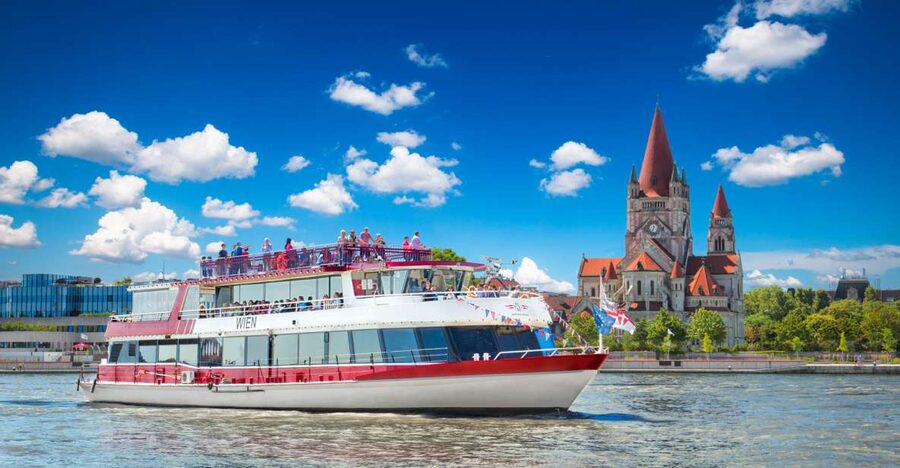
The longer option is the one for river lovers and people who want more than just a quick city skyline sweep. After continuing beyond Schwedenplatz, you head toward the green heart of Vienna and the woods of the Prater area, which shifts the mood from dense city edges to more open riverside scenery.
Then comes the downriver stretch: you sail from Freudenau Lock, past Danube Island, and by that converted grain silo that now serves as a hotel and stadium. That combo—nature-ish river space plus modern reuse—gives the cruise a “Vienna in motion” feel.
When you’re on the long itinerary, you also get more time to notice how the Danube changes character as you move. The water feels wider, the shoreline gets more varied, and you can start to see why locals value the river as a place for both daily life and recreation.
This is also where the cruise becomes a more satisfying “one main activity” day. If you want one calm plan that still feels like you saw something real, the extended route does the most work for your time.
Optional Viennese specialties: good onboard food, no drinks included
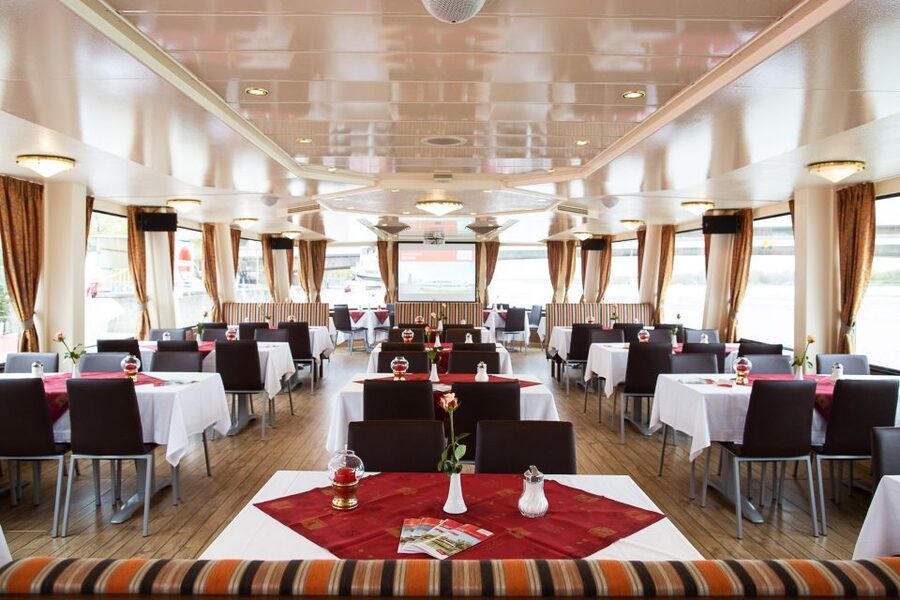
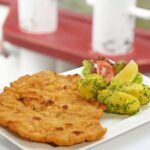
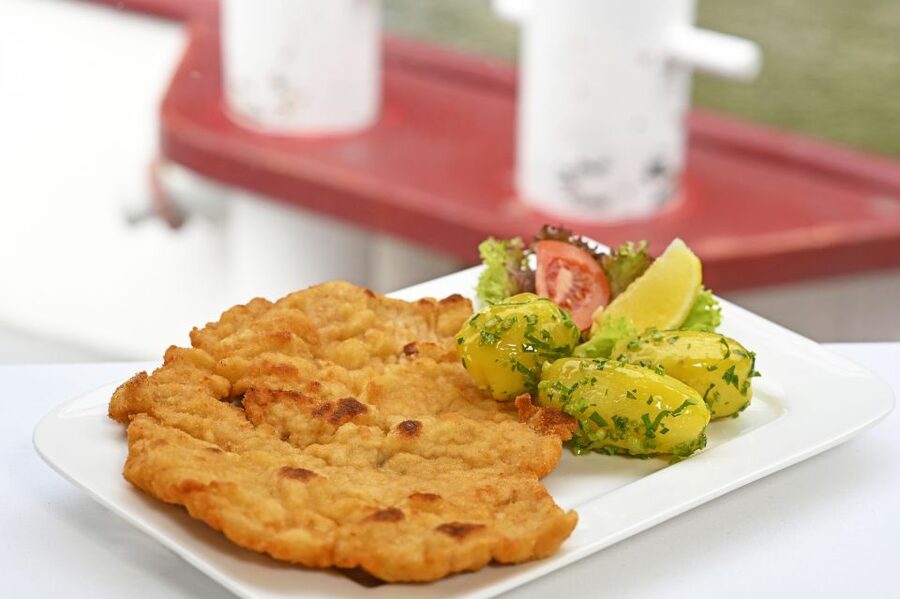
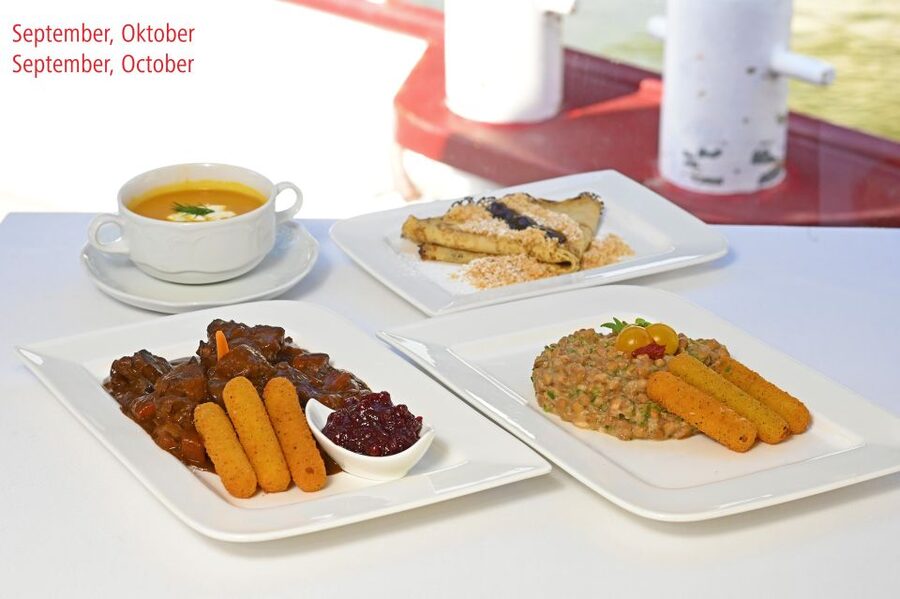
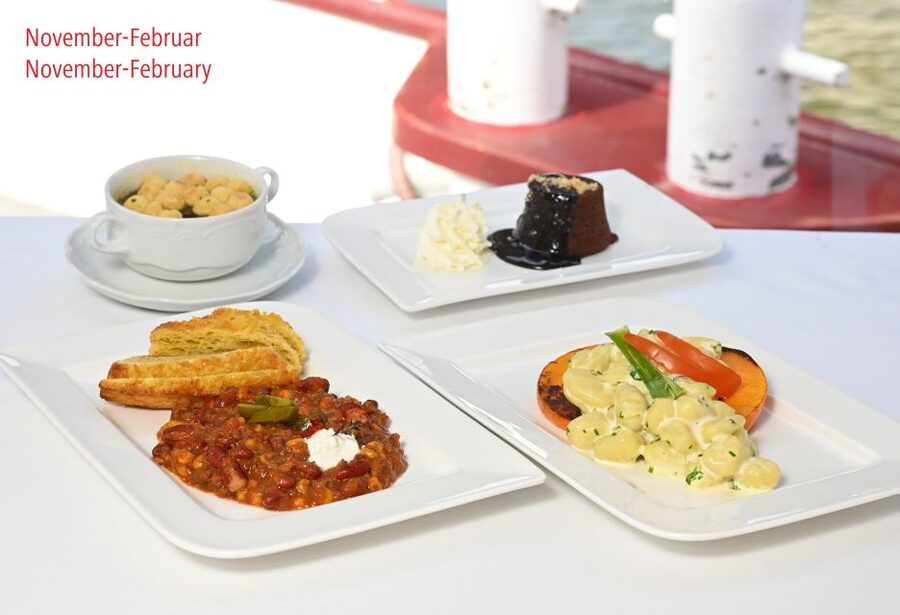
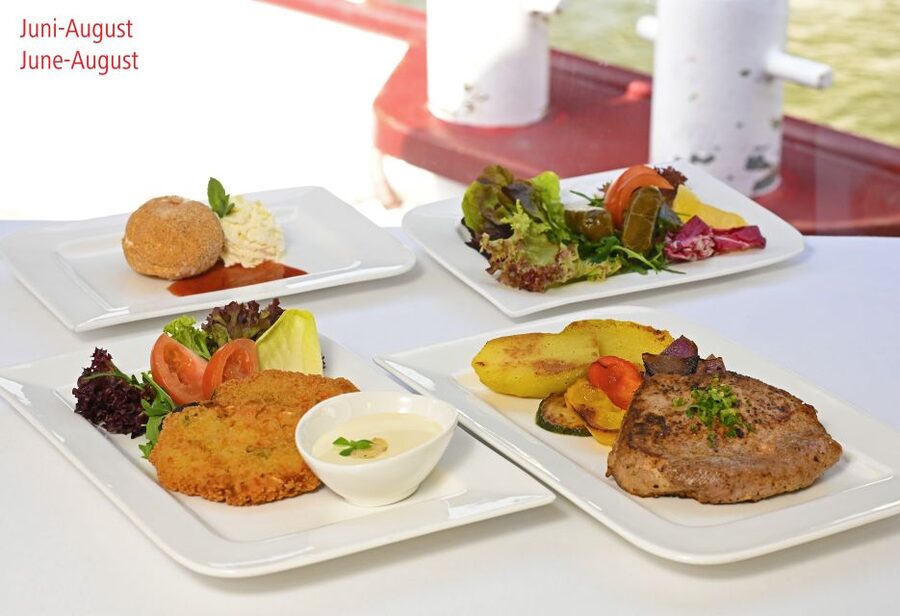
Food is included only if you choose the option with it, and that’s a key value lever. When the food option is selected, I like the fact that you’re not stuck hunting for a meal during a short window—you’re already on the water.
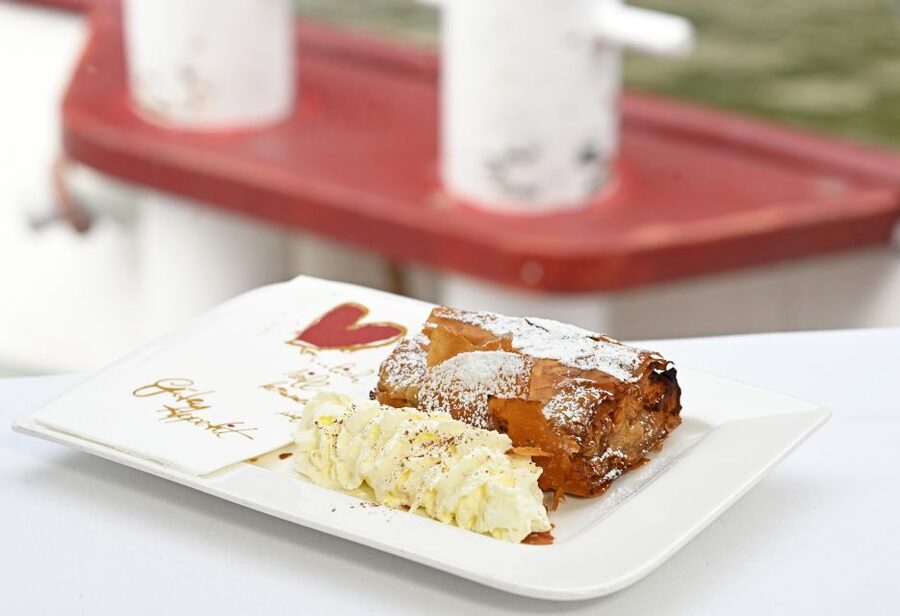
And the onboard food tends to be the standout. People rate the meal as delicious, and the service gets called out positively too. That combination matters: on a short sightseeing activity, a great meal can turn a “nice view” into a true memory.
One more practical note: drinks are not included. If you like beer, wine, or soft drinks with your trip, plan to purchase them separately.
If you have dietary needs, the data here doesn’t specify options, so you’ll want to check with the operator when you book. But if you’re simply curious about trying typical Viennese flavors in a relaxed setting, the food option makes sense.
Price and value: why this usually feels like a bargain
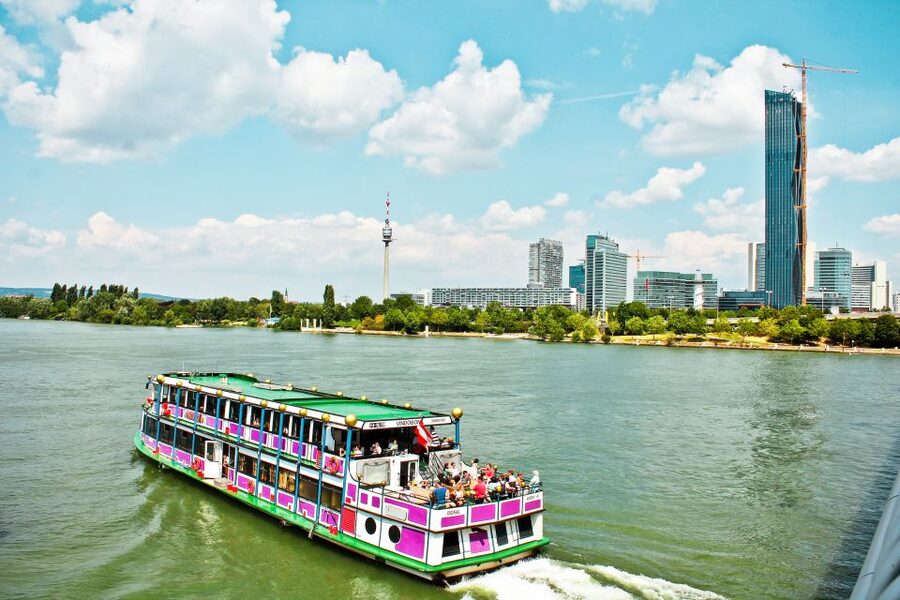
The listed price is $36 per person, and it can feel like good value because you’re paying for time, views, and a guided onboard experience rather than a tight checklist of monuments.
For the money, you get:
- a Danube river cruise (short or extended)
- food depending on option selected
- views linked to major skyline features and distinctive architecture along the route
The real value question is what you want from Vienna. If you’re already visiting palaces and museum interiors, this cruise is an efficient way to add a different angle. If you’re trying to keep costs reasonable while still feeling like you did something “Vienna-specific,” the Danube setting is exactly the kind of experience that won’t feel generic.
If you mainly want the biggest, most famous sights from the city center, you may feel underwhelmed. One caution that I’d take seriously: this isn’t built to be your one-and-done Vienna sightseeing solution.
What you won’t see (and how to pair this cruise smartly)
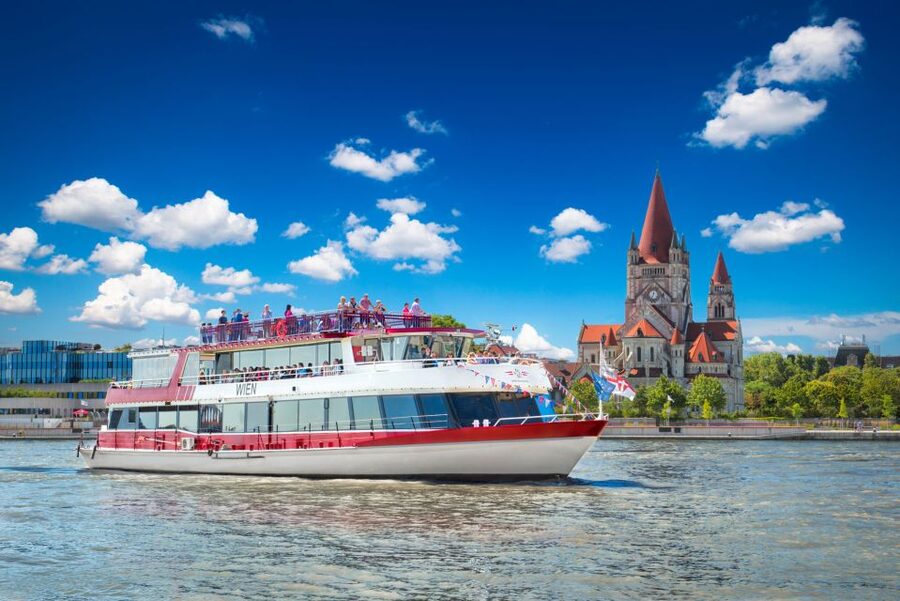
From the river, you can admire skyline landmarks and distinctive buildings, but you won’t get the classic palace close-up experience. This matters if your wish list is centered on places like Belvedere palace or Schönbrunn palace.
So here’s how I’d pair it for best results:
- Do this cruise early enough that it helps you understand the city’s layout.
- Then choose one palace and one museum day on land.
- Use the cruise day as the “light day” that keeps your legs happy.
This approach keeps you from wasting time trying to force palace viewing from water angles that just aren’t designed for it.
Also, consider the vibe: some of the most interesting moments are the in-between scenes—locks, industrial architecture like Spittelau, and the way the riverfront mixes old city with modern towers and reused buildings.
Who should book this Danube cruise?
This cruise fits best if you want:
- a relaxed way to see Vienna without walking nonstop
- great river views and clear city landmarks
- a food add-on that’s actually worth doing, not just an afterthought
- a mix of city and greenery, especially on the longer itinerary
I’d skip or rethink it if your entire trip plan is locked on palace interiors and gardens. This is a scenic cruise with architectural context—not a replacement for a full “great sights” day.
It also suits couples, solo travelers, and families who want an easy activity with a predictable pace. The boat experience is described with strong praise for service, and the overall tone of reactions centers on enjoyment and views.
Should you book the Vienna Danube River cruise with optional Viennese specialties?
If you’re on the fence, I’d book this if your goal is to see Vienna from the water and you’re open to skyline-and-riverside sightseeing. The combination of scenic cruising, strong ratings for onboard food when selected, and the easy pace makes it a dependable choice.
I’d hold off if you need the top palace-and-garden hits as your main priority, because the river route won’t deliver those angles as well as land-based visits do. But as a practical add-on—or a planned break day—this cruise gives you a satisfying slice of Vienna that’s hard to recreate on your own in quite the same way.
FAQ
FAQ
How long is the Vienna Danube River cruise?
The duration is listed as 1.5 to 3.5 hours, depending on the option and available start times.
What’s included in the price?
The cruise includes the Danube River cruise, and food is included only depending on the option you select.
Are drinks included?
No. Drinks are not included.
Where do I meet the tour?
You start at the ticket office of the DDSG Blue Danube.
Where does the cruise end?
It ends back at the meeting point.
Is the cruise wheelchair accessible?
Yes, it is wheelchair accessible.
Do children get a discount?
Children ages 0–9 cruise for free, but food must be purchased separately.
What languages are the host or greeter?
The host or greeter is available in English and German.
How flexible is booking if my plans change?
You can reserve now and pay later to keep your travel plans flexible.
What is the cancellation window?
Free cancellation is available up to 24 hours in advance for a full refund.