REVIEW · PARIS
Your Private boat Captain Guide Explore Historical Paris
Book on Viator →Operated by Paris River Cruise · Bookable on Viator
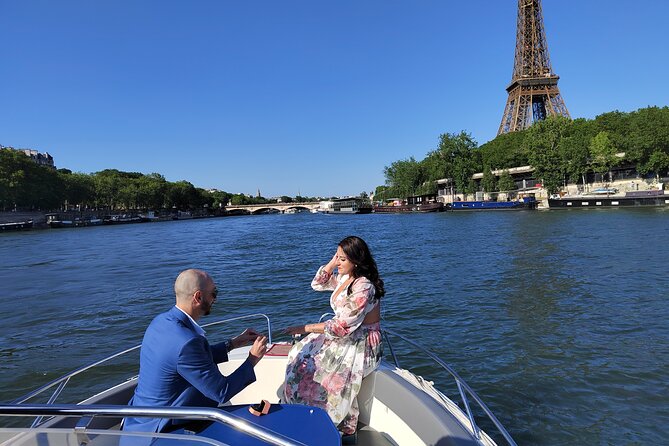
Paris looks better from the water, and this private cruise strings the big sights together fast. I love the private boat setup with Captain Alexis guiding you, and I love how close you get to the Eiffel Tower plus the major bridges for easy photos and cool breezes.
The main thing to watch is weather: the boat is highly weather dependent, can’t sail in heavy rain, and any delay shortens the course.
In This Review
- Key takeaways before you go
- 1.5 Hours on the Seine: what the cruise feels like
- Meet at Port de Javel Haut and settle into a smooth start
- The 1889 statue with a torch-pointing story near Grenelle
- Eiffel Tower views from the water, minus the crowd pressure
- Alexandre III Bridge: cast steel, lions, and a classic underpass
- The first stone bridge in France: Henry III to 1588
- Île de la Cité: the cradle of Paris from the river’s perspective
- Notre-Dame de Paris: 1163 to 1351, seen while you pass
- Saint-Louis Island: the strolling side of Old Paris
- Captain Alexis: the secret ingredient for comfort and photos
- Price and value: $553 for up to 7 people
- Practical stuff that makes or breaks the day
- Should you book this private historical Seine boat tour?
- FAQ
- How long is the private boat tour?
- How much does the tour cost, and how many people fit?
- Is the tour private?
- What language is the guide?
- Where does the tour start and end?
- What landmarks will we pass during the cruise?
- Can I bring food and drinks on board?
- Is there a toilet on the boat?
- What happens if it rains?
- Is the boat accessible for reduced mobility?
Key takeaways before you go
- Private, up to 7 people means less waiting and no crowd crush for landmark photos.
- Captain Alexis brings history with humor, plus extra help for pictures and comfort on chilly or hot days.
- You’ll see a tight loop of icons in about 1 hour 30 minutes without switching trains or walking long distances.
- The route includes the big architectural showpieces: Alexandre III Bridge and the Île de la Cité area.
- Bring-your-own snacks and drinks works well, but the boat has no toilet and you’ll want to plan around that.
1.5 Hours on the Seine: what the cruise feels like
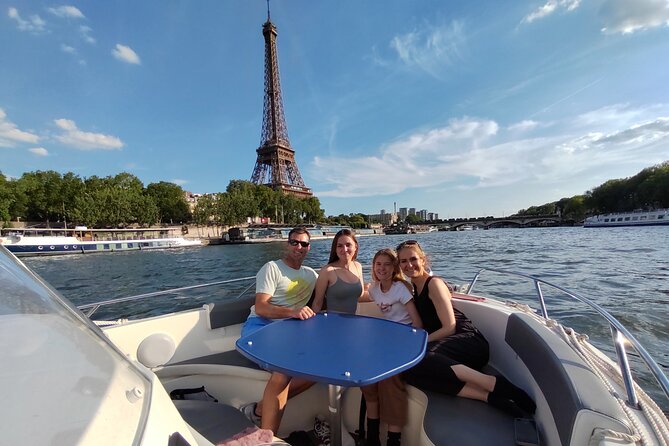
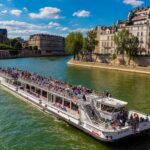
This is a short-and-satisfying Seine ride. You’ll spend about an hour and a half cruising while your captain points out what you’re seeing and shares the story behind it. The value here isn’t just the landmarks—it’s the pacing. You’re not stuck on a slow-moving bus tour, and you’re not wandering in lines for views.
Because it’s private, you can also relax into the experience. In most cases, you get a better photo rhythm too: slow down at the angles that matter, then move on. The boat leaves on time, and any delay shortens your time on the water, so it pays to arrive early at the meeting point and be ready to go.
One more practical note that shapes how the trip feels: there’s no restroom on board. So if you’re bringing kids, or you’re someone who likes a comfort buffer, plan a stop before you board.
You can also read our reviews of more boat tours in Paris

Meet at Port de Javel Haut and settle into a smooth start
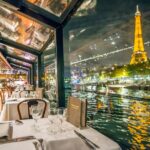
The tour begins at 2 Port de Javel Haut, 75015 Paris, and it ends back at the same meet address. The start location is near public transportation, which helps if you’re coming from central Paris without a taxi.
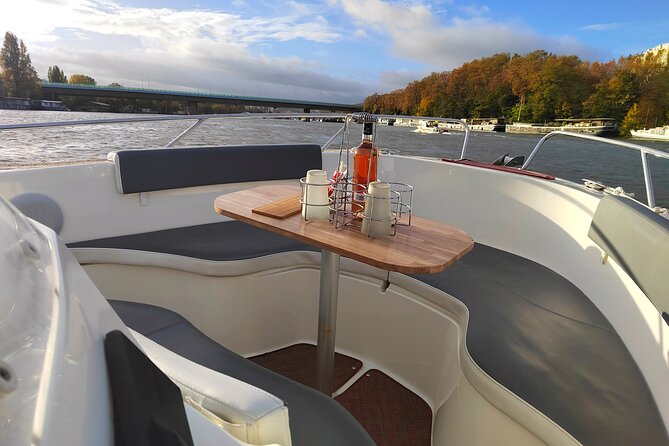
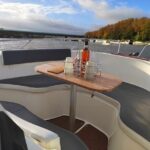
Once you’re on board, the setup is simple. You’ll have plastic cups and a bottle opener provided, which pairs nicely with the fact that you can bring your own food and drinks. The cruise style is casual, not formal—think sightseeing with a guide at your side, not a rigid museum lecture.
It’s also worth factoring in mobility. The boat is not accessible for reduced mobility, and it requires a moderate physical fitness level. If your group includes older travelers, they should have full mobility to handle getting on and off.
The 1889 statue with a torch-pointing story near Grenelle
One of the most fun parts of this route is the statue you pass early on. The story is wonderfully specific: it was installed and inaugurated in 1889 at the Grenelle bridge, then it faced the Eiffel Tower and pointed its torch toward the Elysée. Later, the statue was moved in 1937 to face New York, with its big sister concept tying it into the US and France connection.
Even if you don’t know this background, the passing moment can still land. From the river, you get a strong sense of how Paris has staged symbolic views over time. It also helps you notice something you might otherwise miss on a first trip: Paris doesn’t just decorate buildings—it choreographs sightlines.
Potential drawback here: since you’re not stopping to get out and walk, you’ll want to be ready with your phone/camera immediately as you approach the statue area.
Eiffel Tower views from the water, minus the crowd pressure
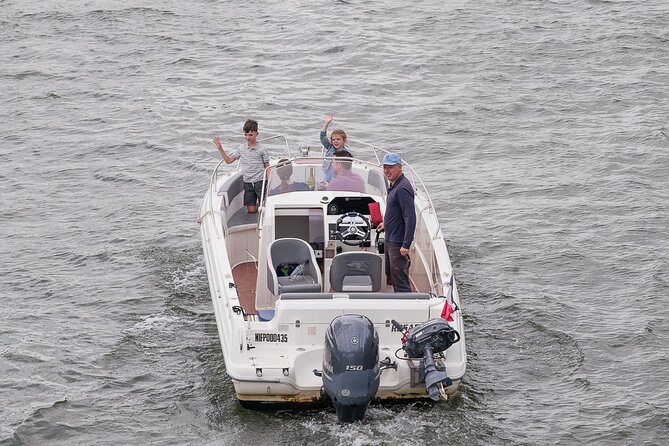
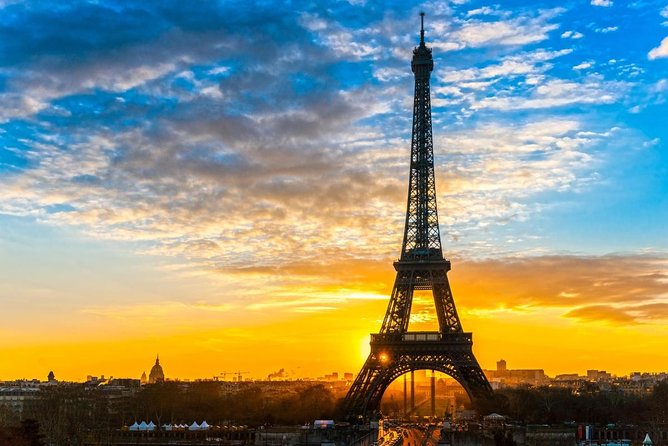
Next up: the Eiffel Tower. The cruise passes in front of it, linking the experience to its original purpose. The story is clear—built for the Paris Universal Exhibition in 1889, the tower’s first big chapter is tied directly to Champ-de-Mars and the exhibition grounds.
What makes this valuable isn’t only seeing the tower. It’s the angle and the pace. On a private boat, you can get viewpoints that feel different from what you see from sidewalks. You also dodge the slow-motion chaos of trying to get everyone positioned with strangers around you.
If you’re sensitive to crowds, this is one of the biggest reasons to book a private cruise. You’ll still be in a public city with other boats nearby at times, but you control your group’s photo moments more easily than on larger ship formats.
Alexandre III Bridge: cast steel, lions, and a classic underpass
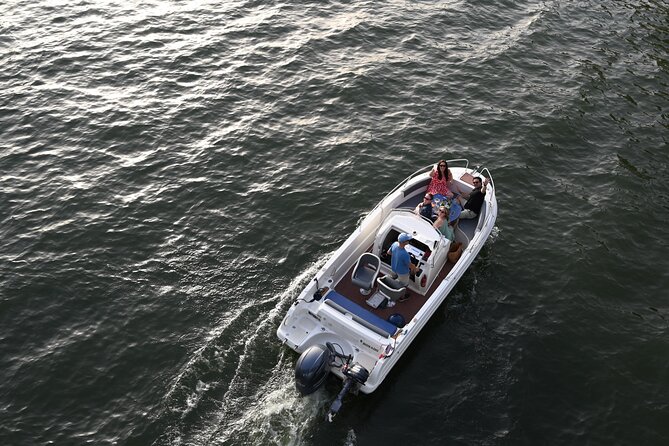
Then you go under one of Paris’s most showy bridges: Alexandre III Bridge. This is the kind of structure that makes you look up. It’s a 160-meter cast steel bridge with layered decoration—bronze candelabra (multi-branch lampposts), tall pillars topped with golden crowns, Louis XIV-style cast iron ornamentation, and lion statues at each end.
The underpass matters. Looking up from the boat while the bridge carries you overhead gives you a different appreciation than standing on the sidewalk. You see the scale of the engineering and the density of the details at once, like a moving frame.
Photo note: this stop is great for family shots because you can keep everyone together. If your group likes posed photos, this bridge is an ideal spot for it—especially when the captain times the moment well.
You can also read our reviews of more guided tours in Paris

The first stone bridge in France: Henry III to 1588
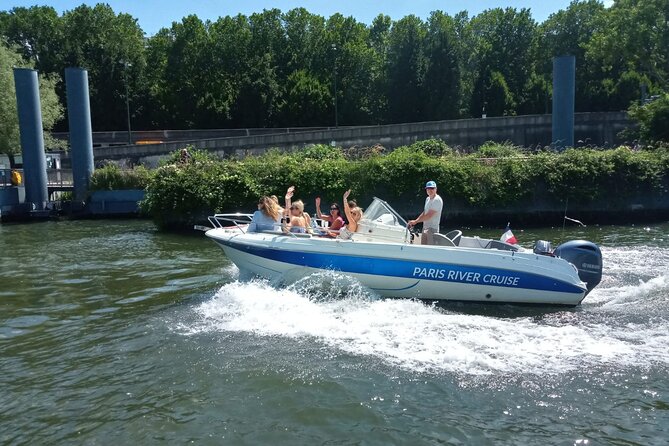
After Alexandre III, the route passes the area of what’s described as the first stone bridge in France. The timeline is historical and detailed. In 1577, King Henry III decided to build it and appointed a commission to oversee the work. A year later, the first stone was laid by the king himself, in the presence of Catherine de Medici and the king’s wife, Louise de Lorraine. Work continued until 1588.
This is the kind of detail that makes a guided cruise feel more real. You start to understand the river as a timeline. Bridges here aren’t just transportation—they’re proof that Paris was investing in permanence long before the modern city skyline arrived.
Drawback to keep in mind: like the earlier statue moment, this is a pass-by view. If you want ultra-close photos of carvings or foundation details, you’ll have to steady your timing and keep an eye out as you approach.
Île de la Cité: the cradle of Paris from the river’s perspective
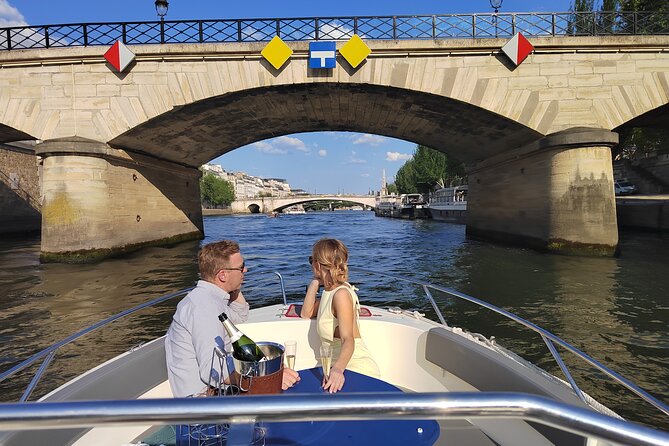
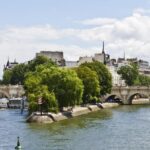
Now you move into the historical heart: Île de la Cité. This is described as the cradle of Paris, where the original nucleus of Lutetia developed. Over time, fortifications shaped how the area grew into the civil, military, and religious center of the region.
The story continues with the Capetian kings building a royal palace that became what you’ll recognize today as the Palace of Justice. Then the bishops built Notre-Dame Cathedral, after which the island became too tight for everyone. That’s when the city expanded—people and power spread to Saint Louis Island and onto both banks of the Seine.
This is one of those moments where the guide narration helps your brain map the city. From the water, you can see how the Seine acts like a moat around the islands, and how the city’s “center” moved outward as Paris grew.
Notre-Dame de Paris: 1163 to 1351, seen while you pass
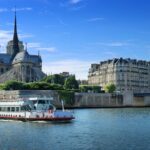
As you cruise, you pass Notre-Dame de Paris. The basics are laid out clearly: first stone in 1163, construction lasting about two centuries, and completion in 1351. The guide also frames the building as a technical feat for its time, pointing out stained glass windows, the nave, the framework, and towers reaching a height of 69 meters.
From a boat, you’re not getting the step-by-step view you’d get inside, and you won’t be walking right up to the façade. But you do get something different: you see the cathedral in relation to the islands, the river bends, and the bridge crossings around it. It helps you understand why Notre-Dame became such a dominant symbol for Paris.
If you love architecture but you’re short on time, this is a good “first contact” move. It sets the stage so that if you later return on foot, you’ll recognize shapes and proportions you already saw from the water.
Saint-Louis Island: the strolling side of Old Paris
Finally, the cruise heads past Saint Louis Island, described as ideal for strolling and for that older, atmospheric side of Paris. The vibe here is romantic and slow. You’ll hear about places people associate with classic Paris days—like Maison Berthillon and its famous ice creams, plus bookshops, small stores, and charming cafés.
Even though you won’t jump out onto the island during the cruise, passing it gives you a strong cue: this is the part of Paris that feels lived-in. It’s a helpful contrast to the more monumental stops, especially if you want to plan where to walk later.
If you’re traveling with kids, this is also a nice moment. It’s less “big building, big facts,” and more “here’s where you’d roam for snacks, books, and dessert.”
Captain Alexis: the secret ingredient for comfort and photos
The strongest theme in the experience details is the captain’s style. Captain Alexis shows up repeatedly as friendly, helpful, and full of history with great humor. That matters because this is a guided pass-by tour. If the captain is dull, you just see landmarks and move on. If the captain is engaging, you actually learn the why behind what you’re seeing.
He’s also described as photo-ready. People talk about him finding good angles and timing for group photos, plus stepping in to help make sure everyone gets a clear shot. That’s a real advantage on the Seine, where you can’t always control boat positioning the way you can on land.
On top of that, Alexis has offered practical comfort. For example, on hot days, he has provided a cooler for refreshments. On colder months, he’s had blankets available. Those small touches make the cruise feel more thoughtful than just a seat-and-snap affair.
Price and value: $553 for up to 7 people
At $553 per group (up to 7), this isn’t cheap in the way a bus ticket is cheap. But it often lands as good value for groups, especially when you compare it to the hidden costs of time and logistics.
Here’s why it can feel worth it:
- You get a private captain and guide, which means your narration is timed to your group.
- You’re paying for space and attention, not just transport.
- The cruise is about 90 minutes, so it can slot in as a highlight without eating your whole day.
- It includes basic drink support: bottle opener and plastic cups.
The pricing also becomes more sensible if you travel as a family or with friends. For two people, you’ll be paying full boat price. For up to seven, the cost per person drops fast, and you get the bonus of everyone being together in one experience.
The best way to decide: think about whether you value photo time, comfort, and a guide’s voice more than saving money.
Practical stuff that makes or breaks the day
Weather is the big one. This is a highly weather dependent cruise. The boat can’t sail in heavy rain, and if rain is predicted across the whole day and your booking time, it’s best to reschedule. You’re also advised to check the forecast 48 hours before departure. Any delay shortens the course, so the schedule is less forgiving than a train you can catch later.
Next: plan around no toilet. Since the boat doesn’t have one, I’d handle bathroom breaks before you board and bring only what you’re comfortable carrying.
Finally: bring your own food and drinks if you want. You can bring them on board, and the included cups help. If you’re going to bring wine or something similar, it’s reassuring that a bottle opener is provided.
One more: the boat isn’t accessible for reduced mobility, and the boat requires full mobility for older travelers. If someone in your group has mobility limitations, you’ll want to consider this before booking.
Should you book this private historical Seine boat tour?
If you want a Paris highlight that’s scenic, guided, and low-stress, I’d say yes—especially if your group is small enough to enjoy the private feel. The experience shines when you care about landmark context, like why the bridges and cathedral matter, and when you want easier photo moments without giant crowds around your group.
I’d only hesitate if your schedule is inflexible and the weather looks uncertain. Rain can reshape the plan quickly here, and the boat can’t sail in heavy rain. Also, if a bathroom on board is a must for your group, this one won’t fit.
FAQ
How long is the private boat tour?
It lasts about 1 hour 30 minutes.
How much does the tour cost, and how many people fit?
It costs $553.00 per group, up to 7 people.
Is the tour private?
Yes. It’s a private tour/activity, and only your group participates.
What language is the guide?
The tour is offered in English.
Where does the tour start and end?
It starts at 2 Port de Javel Haut, 75015 Paris, France, and it ends back at the meeting point.
What landmarks will we pass during the cruise?
You’ll pass by the 1889 Grenelle statue, the Eiffel Tower, Alexandre III Bridge, the first stone bridge in France, Île de la Cité, Notre-Dame de Paris, and Saint Louis Island.
Can I bring food and drinks on board?
Yes, you can bring your drinks and food. Bottle opener and plastic cups are included.
Is there a toilet on the boat?
No, the boat does not have a toilet.
What happens if it rains?
The experience is highly weather dependent. The boat cannot sail in heavy rain. You should check the weather forecast 48 hours before departure, and if canceled due to poor weather, you’ll be offered a different date or a full refund.
Is the boat accessible for reduced mobility?
No. The boat is not accessible to people with reduced mobility, and older travelers must have full mobility.